Aldergrove · Gloucester · Otter · Bradner
Acreage clean-outs: every vehicle and machine in one go
Acreage vehicle removal around Aldergrove, for properties where the old cars, the farm truck and a tractor or two have piled up over the years.
- Cars, trucks and machines on the same booking
- Planned around soft ground and tight lanes
- Useful before a sale, a move or a bylaw visit
Rather talk? Call or text 604-239-8444
Why it piles up
Rural lots collect vehicles
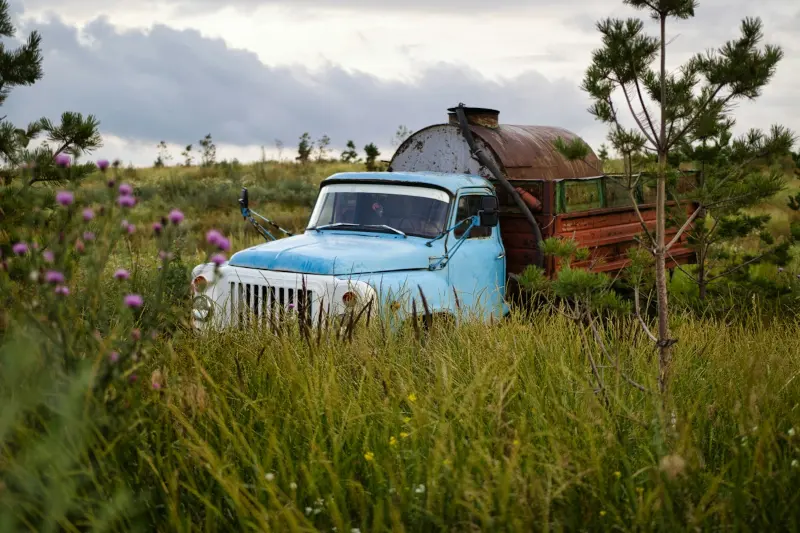
Give a family five acres near 264 Street or out by Glen Valley and there's always space for another one. A car gets parked "for now", the old pickup becomes the farm truck, and a tractor gets replaced but never sold. Twenty years later there are six of them. These are the usual reasons people finally call.
Rules worth knowing
Two that catch rural owners in Langley Township
Commercial vehicle limits
Section 108 of the Township's zoning bylaw allows most rural properties to park or store up to three commercial vehicles, as something that goes along with living there. The Township has been ticketing properties where trucking, truck storage or repairs have crept onto rural and farm land.
Retired dump trucks, old semis and work trucks with no plates count toward the problem even if they never move.
The Agricultural Land Reserve
Much of the farmland around Aldergrove is in the ALR. The Agricultural Land Commission treats parking or storing commercial or industrial vehicles on ALR land as a non-farm use that needs approval.
Equipment you actually farm with is a different matter. It's the dead trucks and the machines from someone else's business that cause trouble.
We're not the bylaw office, and every property is different. If you've had a notice, the Township of Langley or the ALC can tell you exactly what applies to yours.
Planning the day
Make one list, not six phone calls
The easiest acreage jobs start with a list. For each item, note what it is, whether it rolls or runs, and where it sits on the property. A few phone photos of the whole yard help even more.
With that we can work out whether everything fits on one truck, needs two trips, or needs a second machine on site to load the heavy pieces. Cars usually go on a tilt deck. A tractor or a small excavator may fit the same truck. Anything bigger needs a trailer, and we'll say so up front.
Paperwork happens item by item. Each plated vehicle needs its own registration signed, and each machine needs a bill of sale with its serial number. Have it gathered before the truck comes and the day goes quickly.
In more detail
Clearing a rural property: what to know first
A bigger clean-out has more moving parts than a single car. These are the things that make the difference between one tidy day and three messy ones.
Find the papers before anything else
Go through the house and the shop for registrations, old purchase invoices and anything with a serial number on it. Vehicles still registered with ICBC need their APV250. Farm machinery and equipment usually have no registration, so the invoice or bill of sale is what you'll use.
If papers are missing for a plated vehicle, the registered owner or the executor can get a copy of the registration from an Autoplan broker.
Who is allowed to sign
Signing rights sit with whoever is on each registration, or with the executor once that person has passed. The person whose name is on the acreage gets no such right from that, not even over a truck a past tenant walked away from.
If you're not sure who owns something, sort that out first. It's the most common reason a clean-out stalls.
Look for liens on the bigger items
A tractor, a dump truck or an excavator bought on finance may still have a lender's claim on it. A Personal Property Registry search by serial number, or by the owner's name, shows it.
A claim doesn't kill the sale, but the lender has to be paid out or agree first.
Pick the right season
Fields and lanes around Otter, Glen Valley and Bradner can go soft from late fall to spring. A loaded truck on wet ground gets stuck, and so does the schedule. If items sit off the gravel, a dry stretch in summer or early fall is the easy time.
If you can't wait, tell us. Sometimes the answer is dragging things to firm ground first.
Fluids, tires and what stays behind
Cars and machines leave with their fluids in them. The recycler drains and handles those properly, so don't drain anything onto the ground yourself.
Loose tires, old batteries and drums of oil are a separate job. In BC, tires and batteries go back through stewardship drop-off programs at retailers and depots. We can tell you what we can take with the vehicles and what we can't.
Machines that still work
An old tractor that starts and runs, or a mini excavator with a working thumb, may be worth more to a farmer or contractor than as scrap. If something on the list still works, mention it.
We'll quote it either way, and if you'd do noticeably better selling it yourself, we'll tell you.
Asked and answered
Questions people ask
- Can you take several vehicles and machines in one visit?
- Often, yes. Several cars and a small tractor may fit on one truck in two trips on the same day. Bigger machines need a trailer, so they're usually planned as a separate load. Send a list of everything on the property and we'll tell you how many trips it takes.
- Do I need paperwork for every single item?
- Yes. Every plated vehicle needs its registration signed by the registered owner or executor. Machines and unregistered equipment need a bill of sale with the serial number and something showing ownership. If some papers are missing, tell us which items, and we'll go through the options before anything gets booked.
- Can you remove vehicles from ALR land?
- Yes. We pick up from farms and ALR properties all the time. Removing vehicles and equipment that shouldn't be stored there is usually what owners are trying to do. If you've received an ALC or bylaw notice, check its deadline and tell us, so we can plan the pickup to meet it.
- What if a vehicle on my land isn't mine?
- Then you can't sell it, even if it's been sitting on your property for years. Only the registered owner, or an executor, can sign it over. If an old tenant or relative left it, they or their estate need to sign. For a vehicle left behind with no owner you can reach, ask the Township or police how to deal with it.
- Will the trucks damage my lawn or driveway?
- A loaded tilt-deck truck is heavy, and soft grass or a thin asphalt driveway can rut. We'll ask about the ground and plan around it. That might mean using plywood, keeping the truck on the gravel and winching, or waiting for drier weather. Tell us about septic fields and buried lines too.
- How long does an acreage clean-out take?
- A few cars on a gravel yard can be done in an hour or two. A property with a dozen items, soft ground and a machine or two that need a trailer can take most of a day or be spread over two. Once we see the list and some photos, we'll give you a realistic plan.
More pages
Where to next
Ready to clear it out?
Car in the driveway, truck behind the shop? Send the details or call, and we'll come back with a number and a time.